
“A powerful mix of humour & strategy. One of the best wellbeing sessions we’ve had.”
- Ravi Naidoo, Principal, TOD
“Practical, real, and fun. Staff are still quoting Julia’s tools weeks later.”
- PLD Working Well Session Feedback
Working Well in Schools

Between pastoral care, administration, and the daily demands of teaching, the mental load on educators has never been higher. When cognitive load increases, communication drops, decision fatigue rises, and burnout becomes a real risk.
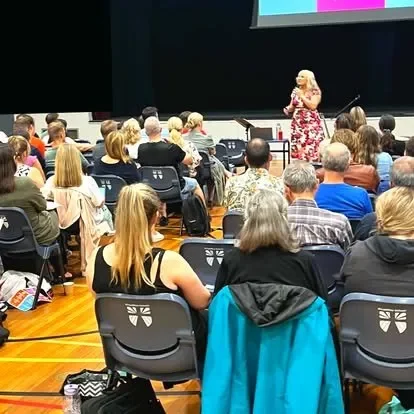
Working Well in Schools with Julia Grace is a high-energy, neuroscience-informed session designed to equip educators with practical tools they can use immediately in real classrooms.
Through humour, relatable stories, and easy-to-remember frameworks, Julia equips educators to manage stress, maintain focus, and bounce forward, even in demanding seasons.
This session is not about adding another wellbeing task. It is about strengthening mental clarity, emotional safety, and the resilience educators need to keep showing up without burning out.
“I can’t recommend Julia highly enough to other schools looking to invest in the wellbeing of their teams.'“
Principal, Belmont School, NSW Australia
“Julia Grace made me realise it’s ok not to be ok”
Student, St Thomas Aquinas School
“Courageous, entertaining, unforgettable. Julia made well-being land.”
Principal, Wellbeing Conference
Session Outlines
SESSION OUTLINE: WORKING WELL FOR EDUCATORS
This practical, neuroscience-informed session helps educators boost their wellbeing, build emotional resilience, and find ways to thrive - not just survive.
1: What’s going on in your brain when you’re overwhelmed - Unpack the neuroscience of burnout and decision fatigue at your “Wobbly Point.”
2: Practical tools to calm your nervous system - Learn real-time strategies to reset your stress response and get back in the zone
3: The power of the Support - Why formalising your support network matters, and how to build one that works before you need it
4: Small changes, big impact - Create a sustainable plan for micro-changes that can make a long-term difference for busy educators
For Longer Sessions:
5: When the Kids get Wobbly - Co-regulation tools for the classroom and resilience tools for tamariki
OPTIONAL MODULE 1 - ONE DEGREE OF C.H.A.N.G.E.
Small habits, real impact - This extension focuses on turning insight into action, building simple, sustainable habits and systems that support both wellbeing and performance.
Participants will:
Learn how small, consistent changes reduce overwhelm
Build habits that actually stick
Identify simple changes that fit into busy schedules
Create systems that support long-term wellbeing and performance
Leave with a clear plan, they can start immediately
OPTIONAL MODULE 2 - ER: EARLY RESPONDERS FOR MENTAL HEALTH
This empowering module equips everyday people to spot the early signs of mental distress, check in with compassion, and respond with confidence.
The 3-Step Framework: A simple, powerful way to:
• See what’s really going on
• Say something with empathy (without freezing or fumbling)
• Support with seeking help and next steps
1: Mental health red flags you can actually spot - How to recognise the signs of wellbeing challenges and why early response is so vital
2: Words that don’t feel awkward - What to actually say – without making it weird or overwhelming.
3: Compile a Kete of resources - Create a list of next steps to have up your sleeve to seek help and support

PERFECT FOR:
Staff Professional Development (PD) / staff meetings
Teacher-only days and Cluster events
Community engagement events for parents / whānau
Leadership off-sites and strategy days
Educators working in high-demand, high-output environments
DELIVERY:
Interactive workshop or keynote settings
40 mins to 180 mins to suit your needs
Engaging, practical and solution-focused
Choose one or both sessions / topics for your event
Tailored for your event
Curriculum links
KEY COMPETENCIES: Managing Self, Relating to Others, Participating & Contributing
LEARNING AREA: Health & Physical Education
STRAND A: Personal Health & Physical Development
Hauora - A Māori philosophy of well-being that includes the dimensions taha hinengaro, taha tinana & taha whānau, each one influencing & supporting others.
KEY FOCUS: Mental Health
ACHIEVEMENT OBJECTIVES:
1. Personal growth & development - Access their health needs & identify strategies to ensure personal well-being across their lifespan.
2. Positive attitudes - Adapt skills & appraise responsibilities in challenging situations & unfamiliar environments.
3. Interpersonal skills - Evaluate info, make informed decisions & use interpersonal skills effectively to manage conflict, competition & change in relationships.
Please note: All topics covered aim to support teachers, students and their whanau in positive mental health practise, at school & home